













WORLDS FIRST SALIVA PREGNANCY TEST
Designed to make testing easier, more discreet, and less stressful. Simply use saliva and get results in minutes.


How it works
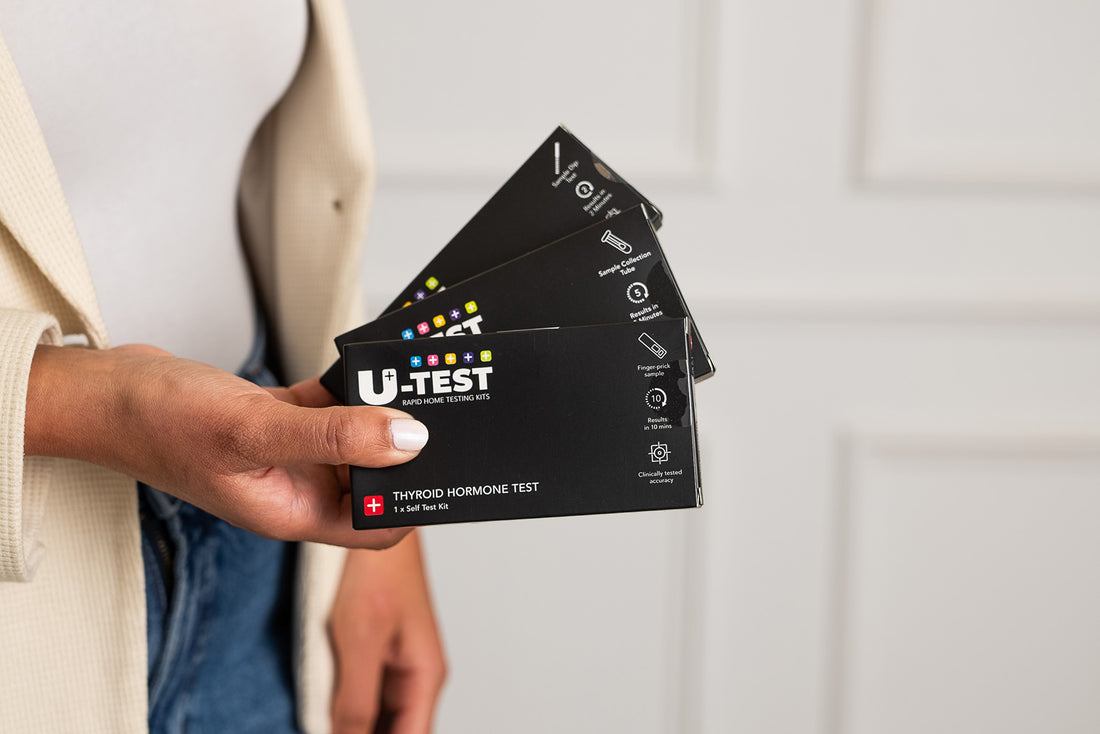
Find your test
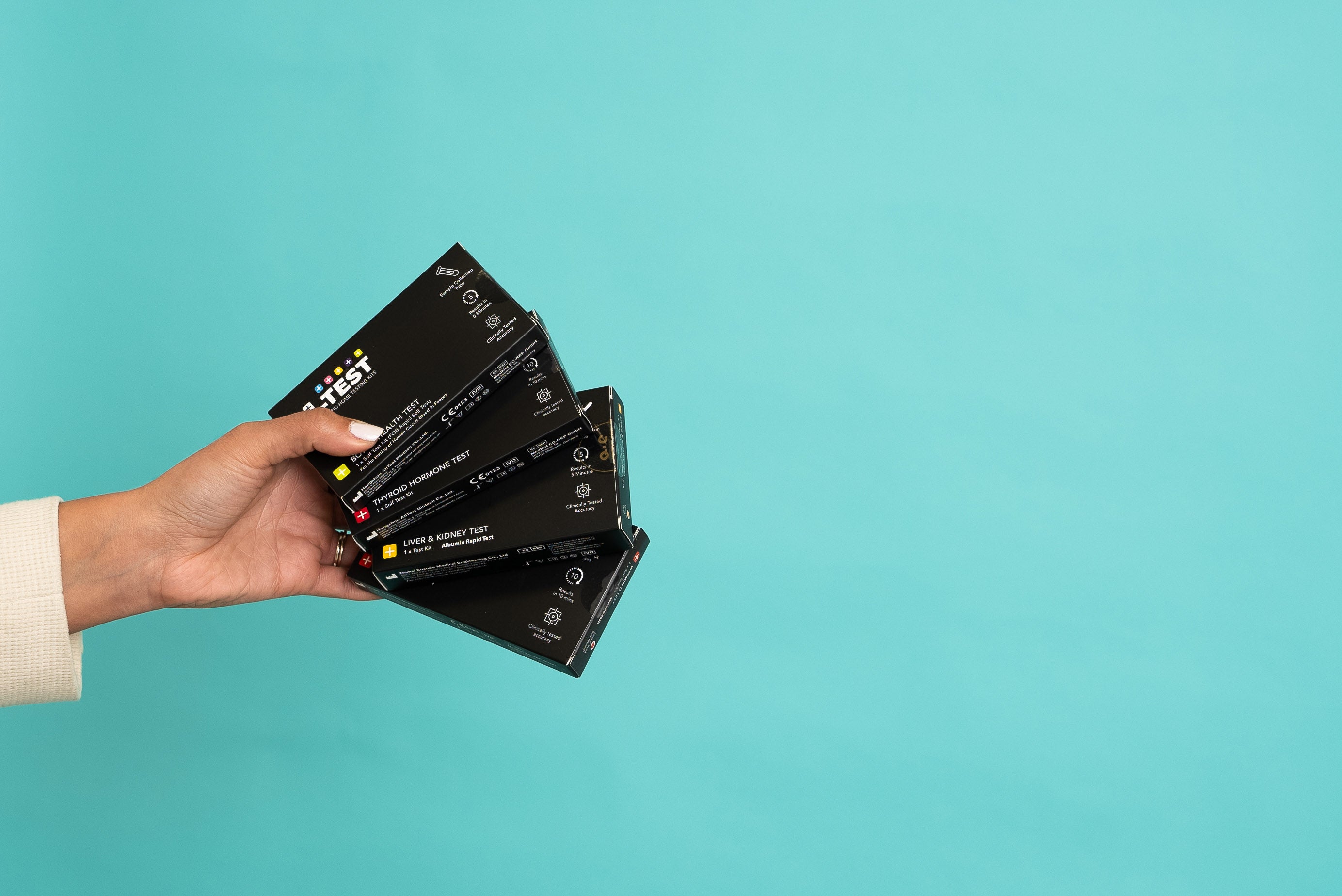
Choose from our range of user-friendly self-tests or take our free quiz to be expertly matched with the right tests for you.
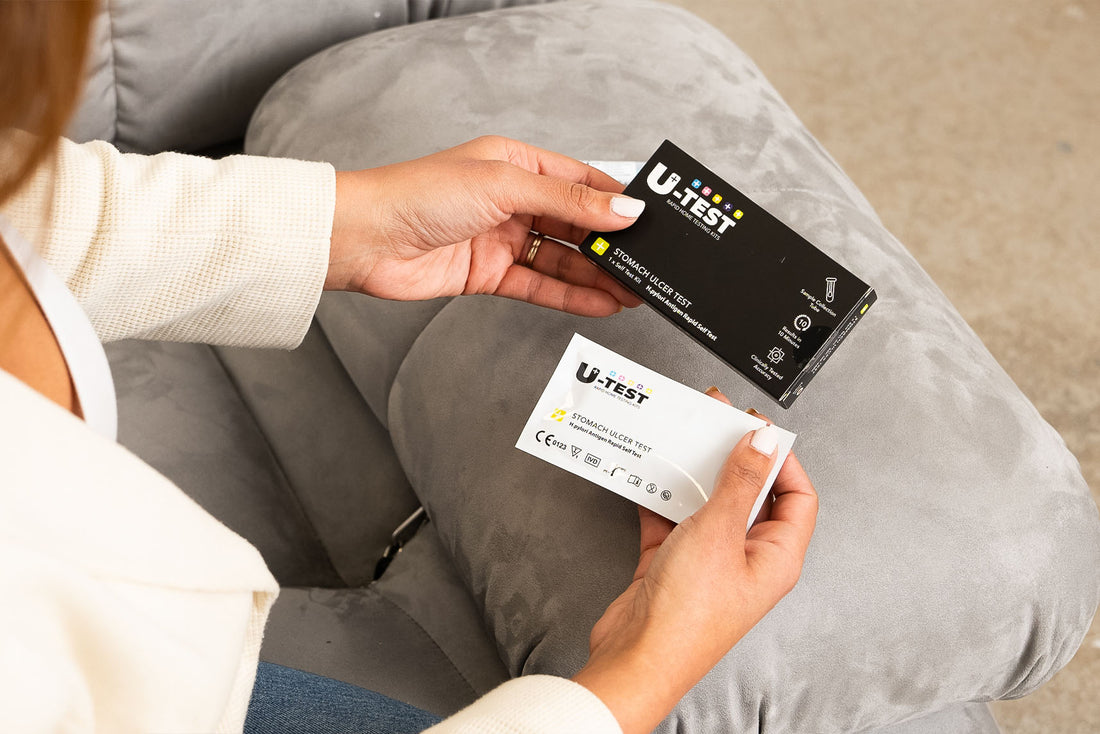
Take your test
Receive your test and follow the step-by-step instructions for accurate, reliable results in minutes, all without having to leave your home.
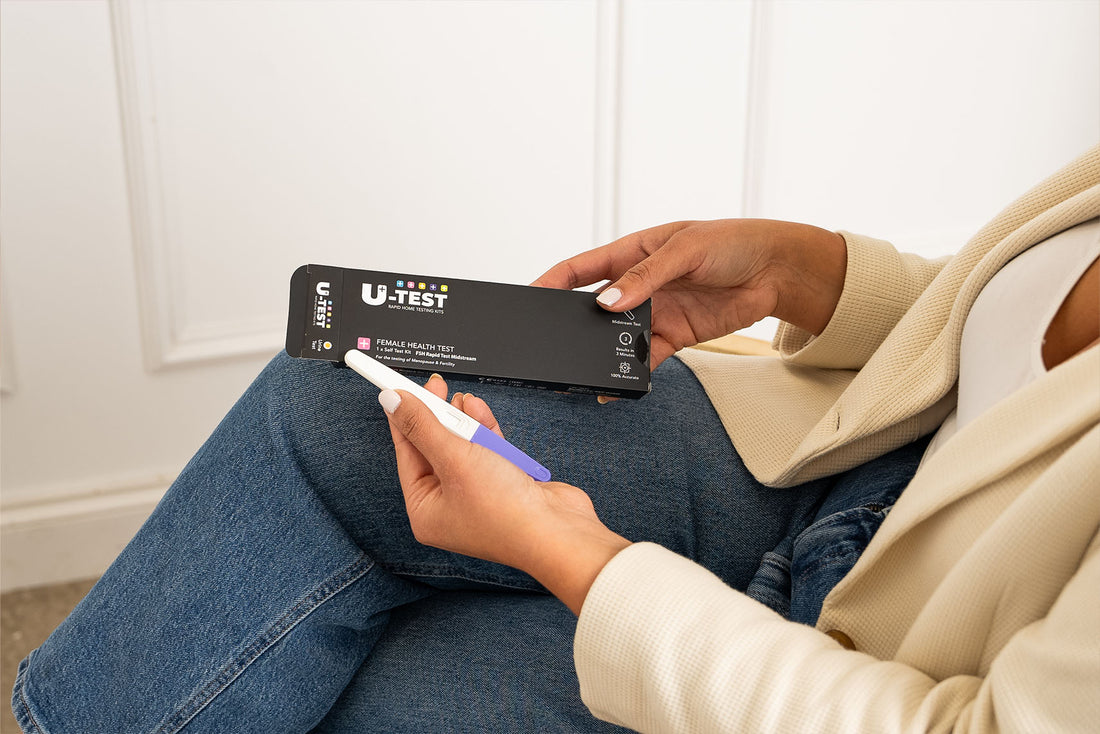
Discuss your results with a GP
Record your test result and follow the guided aftercare advice. U-Test offers immediate access to a designated doctor service.
Browse our tests


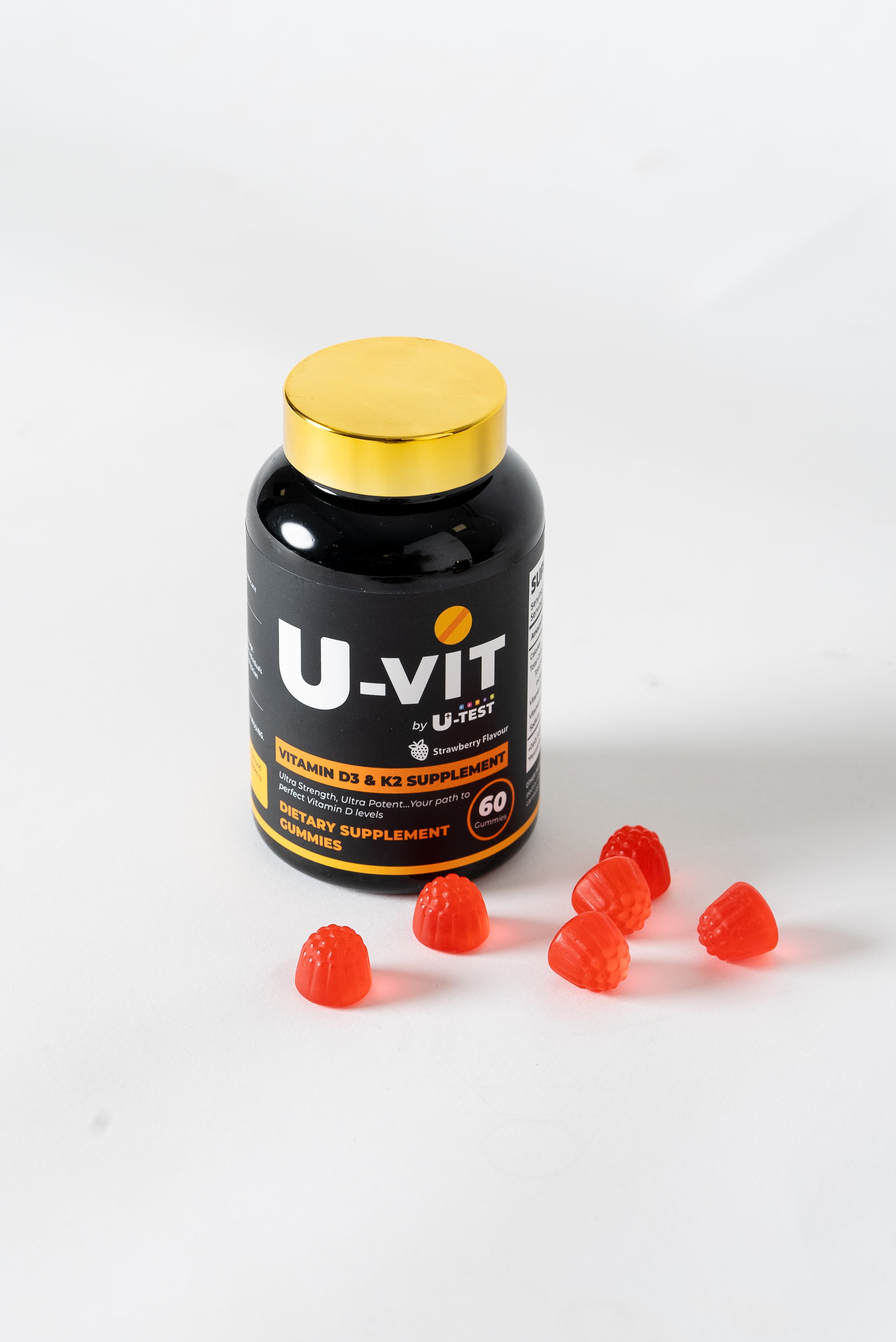
Boost Your Vitamin D Levels Daily
Feel your best with the powerful combination of Vitamin D3 and K2 — now in a delicious, natural strawberry-flavoured gummy. Whether you’re managing a deficiency or simply maintaining healthy levels, U-VIT makes it easy to support your immunity, bones, and overall wellbeing

Let's find the right self-test for you.
Take our free quiz to be expertly matched with the right tests for you.


News

He Was 39. The Only Warning Sign Was Blood in the Toilet.
A recent Business Insider report told a story that's becoming worryingly familiar: a 39-year-old man noticed blood when he went to the toilet, assumed it was nothing serious, and later found out it was colon cancer. No family history. No dramatic build-up. Just one symptom that's incredibly easy to explain away. It's the kind of story that stops you mid-scroll — because most of us have, at some point, spotted something we weren't sure about and decided not to think too hard about it. Here's why that instinct is worth challenging. Bowel cancer isn't just an "over-50s" disease anymore For years, colorectal cancer was filed away as something that happened to older people. That picture is changing fast. Cases in adults under 50 have been climbing, and doctors are increasingly seeing diagnoses in people in their 30s and 40s — often at a later stage, precisely because younger patients (and sometimes their doctors) don't expect it. The result is a dangerous gap: the people least likely to be screened are exactly the ones being caught out. Why blood is the symptom that matters most Of all the warning signs, blood in your stool is the one specialists flag first. Research presented at a major surgical congress found that in patients under 50 who were investigated for symptoms, rectal bleeding was the single strongest predictor of a colorectal cancer diagnosis. The tricky part is that blood doesn't always look the way people expect: Bright red blood on the paper or in the bowl often points to bleeding lower down. Dark or tarry stools can suggest bleeding higher up in the bowel. Hidden blood — the kind you can't see at all — can be present long before anything is visible. That last point is the crucial one. By the time blood is obvious to the naked eye, it may have been there for a while. A lot of early bleeding is invisible, which is exactly why it gets missed. "It's probably just piles" This is the sentence that costs people time. Haemorrhoids are common and often the actual cause — but they're a guess, not a diagnosis. The only way to know for sure is to check. Other signs worth taking seriously, especially if they last more than three weeks: A change in your normal bowel habits Stools that are consistently thin, narrow or ribbon-like Persistent tummy pain, bloating or cramping Unexplained tiredness or weight loss Feeling like you can't fully empty your bowels One symptom on its own may be nothing. But "new for you and not going away" is always worth a proper look. Where a rapid test kit fits in You can't see hidden blood — but you can test for it at home, in minutes, without waiting for an appointment. The U-Test Bowel Health Test Kit uses Faecal Occult Blood (FOB) and Faecal Immunochemical Test (FIT) technology to detect non-visible blood in a stool sample, with a clear result in under 10 minutes. It's discreet, simple to use, and gives you a fast answer — the kind of quick, private check that makes it far easier to act early instead of waiting and worrying. That's the whole point of a rapid test kit: it lowers the barrier to checking. The man in that Business Insider story had a visible symptom he could have acted on. Plenty of people don't have any visible symptom at all — and a simple screen is the only way they'd ever know to look closer. An important note A rapid test kit is a screening tool, not a diagnosis. A negative result is reassuring, but it doesn't replace medical advice — and it should never override your own instincts about your body. If you have symptoms that concern you, or if your test shows blood, speak to your doctor. Equally, if you're seeing heavy bleeding, very dark stools or severe pain, don't wait for a test — get medical help. The message from stories like this one isn't to panic. It's the opposite: the earlier bowel issues are found, the more treatable they usually are. A few minutes of checking is a small price for that kind of peace of mind. Curious about your bowel health? Take the guesswork out of it — explore the U-Test Bowel Health Test Kit.
Learn more
Jeremy Clarkson's Diagnosis Is a Reminder Every Man Over 40 Needs to Hear
Jeremy Clarkson's diagnosis is a timely reminder that early prostate cancer often has no symptoms. Here's why regular PSA testing matters — and how to check your prostate health at home.
Learn more
From a Garage to the Prix Galien UK Awards: The Story Behind Our Nomination
From a Garage to the Prix Galien UK Awards: The Story Behind Our Nomination Five years ago, I was sat in my garage in South Wales during COVID, watching the world change and trying to work out how I could help. I didn't have a lab. I didn't have a background in diagnostics. What I had was a growing sense that something was shifting in how ordinary people thought about their own health — and a stubborn belief that they deserved better access to it. This month, that belief took me and my brother Harry somewhere we never expected: the Prix Galien UK Awards in London, with U-Test @ Home nominated for Best Medical Technology. If you'd told me five years ago that's where this would lead, I'd have laughed. A simple idea, formed in a strange time During the pandemic, something changed in how people related to testing. For the first time, millions of ordinary people were getting fast, clear health information without waiting days for answers or relying on someone else to interpret them. They could find out what they needed to know quickly — on their own terms, often in their own homes. I watched it unfold and couldn't stop thinking about how powerful that was. It felt like a glimpse of how health information should work: simple, fast and available to everyone, not locked behind appointments, waiting lists or cost. That idea stuck with me. I had no idea at the time that it would go on to shape the rest of my life. Building U-Test The mission behind U-Test has always been embarrassingly simple. We believe health testing should be available to everyone — not just those who can afford it, and not just those who know how to navigate the system to get it. So we set out to build rapid test kits that anyone could pick up, use with confidence and understand without a medical degree. No jargon. No gatekeeping. Just clear answers when people need them. It hasn't always been smooth. Building a diagnostics business from a standing start in South Wales means learning fast, getting things wrong, and obsessing over the details most people never see — the accuracy, the instructions, the experience of opening the box and actually trusting what you're holding. Every kit that goes out the door has to earn that trust. But that simple belief has carried us a long way. Far enough, it turns out, to end up on one of healthcare's biggest stages. The night itself Walking into the Prix Galien UK Awards in London was genuinely surreal. The room was full of world-class scientists, clinicians, innovators and healthcare leaders — people who've spent careers pushing medicine forward. And there we were, two brothers who started this in a garage, being recognised among them. It wasn't surreal because of the nomination itself. It was surreal because of the journey. From a global pandemic and a half-formed idea, to a category called Best Medical Technology, surrounded by people we've admired for years. We didn't win on the night. And honestly, that's okay. We left feeling something far more valuable than a trophy: proof that the thing we set out to do actually matters. That a business built on accessibility, not exclusivity, has a place at the top table. What this really means A nomination like this isn't a finish line. If anything, it's a reminder of how far we still have to go. There are still too many people who put off finding out something about their health because the process feels slow, expensive or intimidating. Every one of those people is the reason U-Test exists. The Prix Galien recognition doesn't change the mission — it sharpens it. To everyone who's bought a kit, recommended us to a friend, or simply backed what we're trying to build: this nomination belongs to you as much as it does to us. You're the proof that accessible testing isn't a nice idea — it's something real people want and use. We're proud of how far we've come. We're more excited about what's next. U-tests for the masses, not the privileged few. — Jamie & Harry, U-Test
Learn more
Testimonials
U-Test Customer
I’d been having a slight pain in my stomach — nothing major, just a bit of a niggle. While I was in Home Bargains, I spotted the U-Test Bowel Health Test and decided to grab one. It came back positive for blood, so I called my doctor, who arranged for the NHS version that gives a detailed reading. That result was sky-high, so I was put on the “suspected cancer pathway” for an urgent referral. I won’t lie — I was terrified!
The wait for the NHS appointment was about six weeks, so while I was in London for work, I decided to go private and had the procedure done that same week. They found a small polyp, which they said was common and removed it straight away. Thankfully, it didn’t look sinister, but they tested it to be sure. Polyps can turn bad over time, so I’m incredibly relieved I took that U-Test. Honestly, it might have caught something really early — I’m so glad I did it.

U-Test Customer
I’d been having some stomach discomfort on and off for a while, and although I didn’t think it was anything serious, I wanted to be sure. I came across U-Test and thought it was great that there was an affordable, reliable option available for regular people like me — no appointments, no waiting, just peace of mind.
I ordered a few different tests, including the bowel health one, and everything came back clear. It was such a relief! The instructions were easy to follow, and it only took a few minutes. I honestly think it’s brilliant that something so simple and inexpensive can help you keep an eye on your health. I’ll definitely be using U-Test again in the future.
